
Dental implants are amazing prosthetic devices designed to be surgically inserted into the jawbone so they can support lifelike restorations like crowns, bridges, and dentures. All-on-4 dentures and snap-on dentures can be great ways to restore the smiles of patients who have experienced extensive jawbone atrophy, but there are significant differences in how they work. Here’s a quick look at All-on-4 and snap-on dentures and how they may be able to improve your smile and your oral health.
All-on-4 Dentures
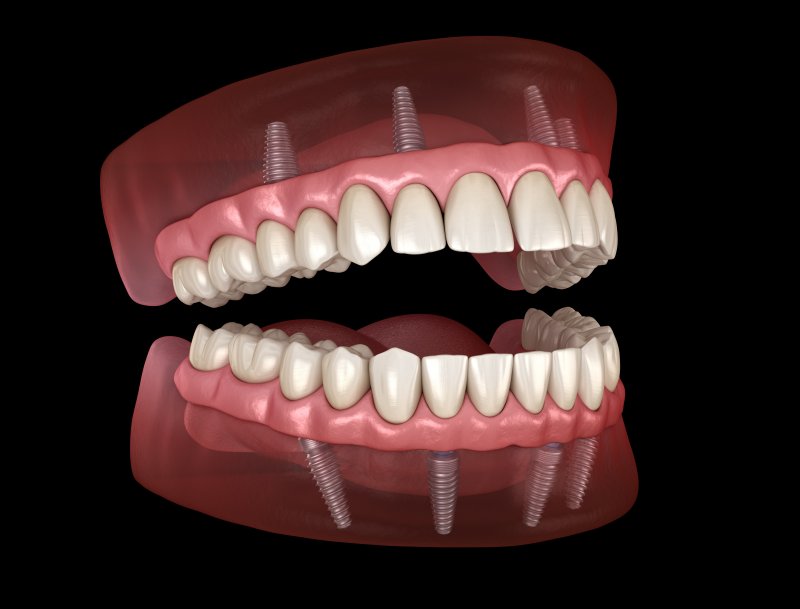
An all-on-4 denture is mounted on four dental implants placed at key points along the dental arch. Typically, the two implants positioned towards the back of the mouth are placed at angles designed to maximize how much contact they make with the jawbone so they can form a sturdier hold during the process of osseointegration. All-on-4 dentures can be a fantastic way to address extensive tooth loss if you have thin jawbones, and they can often be placed in a single day.
Snap-on Dentures
Unlike most types of implant dentures, snap-on dentures are designed to be detached from the implants for hygiene purposes. These devices typically require only three to five implants to be placed, and they can be an affordable way for patients on a budget to replace their teeth. In some cases, a patient receiving implant dentures may wear a snap-on denture temporarily while their permanent restoration is being manufactured.
How Are Dental Implants Placed?
Dental implants are placed through a minimally invasive surgical procedure rendered painless with anesthetics. When the patient is suitably numb, their dentist will surgically insert titanium pieces into the jawbone through the gumline, creating artificial dental roots that will gradually fuse with the bone tissue through the natural process of osseointegration over the course of several months. These devices provide the sturdy foundation restorations like crowns, dentures, and bridges need to exert superior chewing power and remain functional for many years.
Implant dentures may be the best way to achieve your ideal smile. Consulting with your dentist can help you understand how to preserve your oral health after tooth loss.
About the Author
Dr. Biju Cyriac earned his dental degree at New York University College of Dentistry and continues his education with postdoctoral coursework. He is a proud member of the American Dental Association and the Academy of General Dentistry. Areas of expertise include general, restorative, cosmetic, and emergency dentistry as well as denture and implant services. If you’d like to consult with Dr. Cyriac as to the best way to replace your lost teeth, contact his York office online or dial (717) 741-0893.